
ABOUT
Our Journey
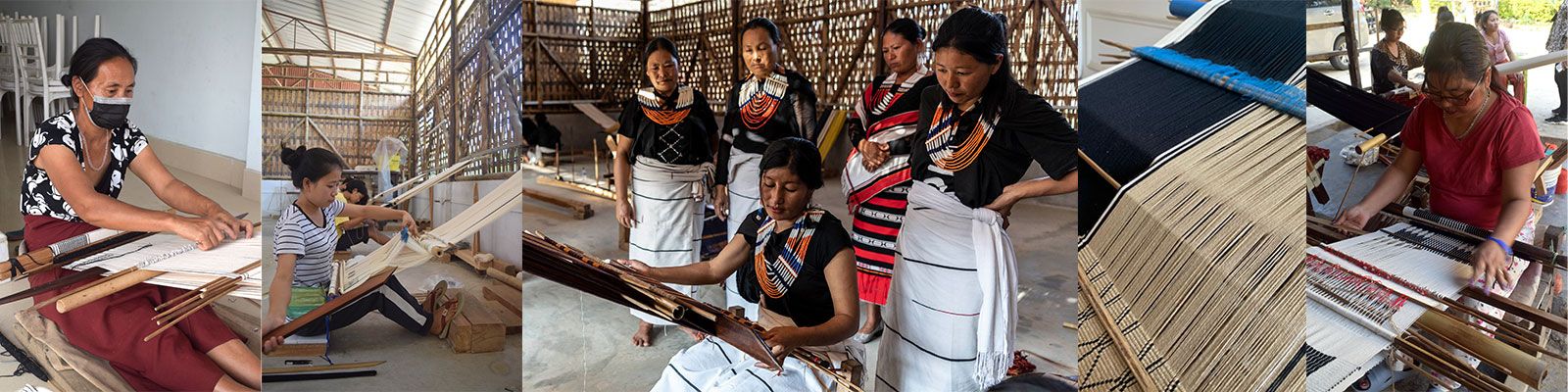
From a Single Loom to a Movement
Heirloom Naga began in 1993 with one weaver and a simple yet radical question: Can Naga textiles be reimagined for a contemporary world without losing their soul?
The answer travelled faster than expected.
Those first handwoven samples — modern in aesthetic yet deeply rooted in tradition — moved from a backyard loom to the window displays of a leading lifestyle store. What started with just three weavers grew to fifty within a year, marking a historic moment: for the first time, loin-loom textiles — created on one of the world’s most ancient looms — entered mainstream design boutiques and high-end stores beyond Nagaland.
Weaving as Livelihood, Identity, and Legacy
For the women behind the loom, weaving has never been merely a craft.
It is a lifeline woven between farming seasons, household responsibilities, and the pursuit of dignity and independence. What began as part-time income soon became a profession — one passed proudly from mothers to daughters. With each generation, the skills sharpened, the stories deepened, and the cultural threads remained unbroken.
Reinventing Tradition for a Global Stage
Over the past twenty-five years, Heirloom Naga has taken "Made in Nagaland" textiles to the world.
By innovating with braided tassels, reviving the use of cotton and eri silk, and championing natural fibres, we have created fresh design languages while restoring authenticity to the region’s weaving heritage.
Our work has helped shift Naga textiles from traditional settings to global homes, galleries, and discerning clientele.
A Collective of Cultural Custodians
Today, Heirloom Naga is more than a weaving initiative — it is a movement.
More than 450 women, representing tribes such as Zeliang, Chakesang, Phom, Konyak, Angami, Sangtam, Chang, Yimchungrü, and Sumi, now weave from the sanctity of their homes.
Each loom is their own; each fabric carries their voice.
By bringing work to their doorsteps, we:
- stem rural migration,
- strengthen local economies,
- and ensure women are active custodians of their cultural legacy.
Despite the challenges of remoteness and limited infrastructure, our fabrics now reach clients across the world. Every piece tells a story of resilience, continuity, and craftsmanship — cloth that journeys from humble village homes to global markets.
At the heart of Heirloom Naga lies a simple belief: to honour the hands that weave, and the heritage they carry forward.
Meet the Founder: Jesmina Zeliang

Jesmina Zeliang has been reshaping the narrative of Naga textiles since she launched her first collection in the early 1990s. By blending traditional motifs with contemporary design sensibilities, she has emerged as a pioneering voice in reviving ancestral weaving skills and redefining indigenous craft for modern audiences.
Beyond Heirloom Naga, Jesmina leads several craft-focused ventures:
- Founder & Proprietor, Cane Concepts
- Founding Partner, Konyak, a North-East specialty store in Guwahati and Dibrugarh
- Founding Partner, Razhü Pru, a heritage hotel in Kohima
Her leadership extends to national platforms as well. As a member of the Committee of Administration of the Export Promotion Council for Handicrafts (EPCH), she became the first woman president of the Indian Handicrafts & Gift Fair in 2018.
Jesmina has represented the North-East Region and India at global craft delegations, and in 2013, she was selected by the U.S. Government for the prestigious International Visitor Leadership Program (IVLP) under the theme "Economic Integration Through Women’s Empowerment."
For over three decades, she has championed exports of cane, bamboo, and handcrafted textiles from the North-East, while empowering women from marginal communities across the region.
Awards & Honours
- JSW Prize for Contemporary Craftsmanship, 2019
- Governor’s Medal for contributions to Art & Crafts, 2014
- Woman Entrepreneurship Award, FLO, FICCI North East Chapter, 2008
- Kamla Devi Award for Crafts, Crafts Council of India, 2004

